


How To Avoid Sargassum Problems and Choose a Beachfront Property for Your Vacation 🌊

Updated: May 5

Dreaming of a perfect beach vacation? Turquoise water, white sand, total relaxation… until you arrive and the beach is covered with brown seaweed.
That’s sargassum (sargasso) — one of the most common yet underestimated issues across the Caribbean.
This guide will help you choose the right beachfront property and avoid unpleasant surprises.
🌎 1. Sargassum Is a Caribbean-Wide Problem (Not a Local Issue)
Sargassum is not limited to one destination. It affects a vast region:
· from the coasts of South America (Brazil, Argentina).
· across the entire Caribbean.
· up to Florida and the southern United States.
It originates from the Great Atlantic Sargassum Belt, a massive seaweed zone visible even from satellites.
👉 Bottom line:
This is a regional phenomenon — not a problem of a specific hotel or town.
🧭 2. Location Is Everything: Which Beaches Are Most Affected?
Not all beachfront properties are equal. Geography plays a crucial role.
❌ Most affected areas:
· east-facing Caribbean coastlines
· open beaches directly exposed to ocean currents
Examples:
👉 Why?
These areas are directly exposed to ocean currents that carry sargassum ashore.
✅ Less affected/protected areas:
Islands and west-facing beaches
Locations behind natural barriers
Lagoons, bays, and sheltered coastlines
👉 Natural protection = significantly less sargassum.
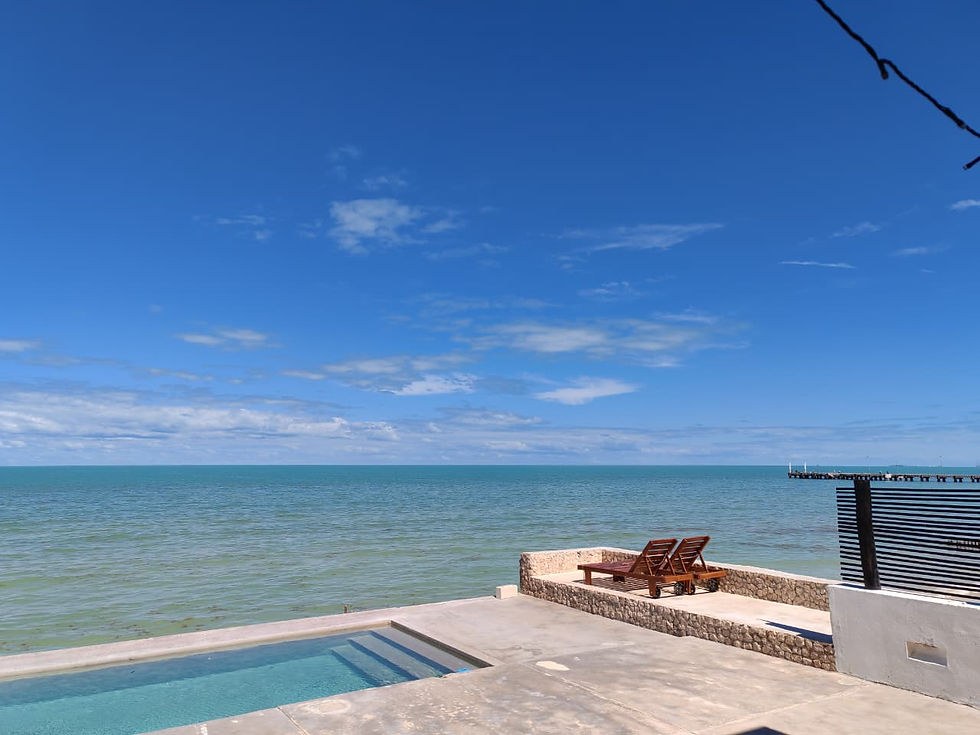
🟢 KEY INSIGHT: Gulf of Mexico (Yucatán Coast)
This is a major advantage that many travelers overlook:
· Gulf-facing coast (Progreso, Chuburná, near Mérida)
· Sargassum is very rare here
👉 If it appears:
It’s minimal
It disappears quickly
It rarely affects your vacation

📅 3. Sargassum Season: When to Avoid It
Sargassum is seasonal (but not fully predictable):
🔴 High season (worst months):
· May to October
· peak: June to August
🟢 Low season (best time to travel):
· November to March
· little to no sargassum
⚠️ Important: This is not an exact science.
👉 One day, the beach can be perfectly clean…
👉 The next day, completely covered.
It all depends on:
Wind direction
Ocean currents
Temperature
🌬️ 4. Why Online Reviews Can Be Misleading
You check Google, Airbnb, or Booking and see:
⭐ “Perfect beach!”
⭐ “No seaweed at all!”
…then reality hits.
👉 Sargassum is highly dynamic:
It can arrive within hours
It can disappear overnight
Even recent guests often report:
“First days were perfect, then suddenly everything changed.”
✔️ How to check reviews smartly:
Look for very recent reviews (last days/weeks)
Check Instagram stories and local Facebook groups
Don’t rely on old reviews
🧠 5. The Most Important Rule
Don’t ask: 👉 “Is there Sargassum?”
Ask instead: 👉 “Is this location exposed to sargassum?”
This single question makes all the difference.
🏝️ 6. Where to Book a Beachfront Property Without Sargassum Stress
✅ Carefully selected locations matter
🌊 Mex Maldives – Chuburná (Yucatán)
Located on the Gulf of Mexico
Almost no sargassum
Calm waters, peaceful atmosphere
🌴 Cancún – Puerto Juárez
naturally protected by:
Isla Mujeres
the shape of the coastline
👉 much lower risk compared to the Zona Hotelera or the open Caribbean coast
🔥 Quick Summary
✔️ Sargassum affects the entire Caribbean
✔️ Open Caribbean beaches are the most exposed
✔️ Season: May–October (peak in summer)
✔️ Online reviews can be outdated or misleading
✔️ Gulf of Mexico = safest option
✔️ Location matters more than property luxury
💡 Final Tip
You can book:
A luxury villa
A beautiful beachfront apartment
A top-rated resort

…but if the location is wrong, your experience may not match expectations.
👉 Choose smart — not just beautiful.
Thank you for reading my Blog
You may also be interested:
About the Author
Entrepreneur and business consultant, living for the past eight years in Cancún, Mexico – a place that has become both my home and a source of inspiration. I'm a passionate traveler, yacht captain, kitesurfer, and a dedicated host, always seeking to create meaningful experiences.
I love meeting people, hearing their stories, discovering diverse cultures, and sharing what I’ve learned along the way. Helping others and supporting local animal rescue efforts are causes close to my heart – caring for homeless animals is a meaningful part of my daily life.
This blog was born out of a desire to share – knowledge, passion, and glimpses of everyday life in Mexico. I hope you find something here that inspires you.


Comments